news
The 26th Amendment Meets a Powerball 26
Powerball drew 26 on September 23, 2026, opening a timely look at the amendment protecting voting rights for citizens age 18 and older.
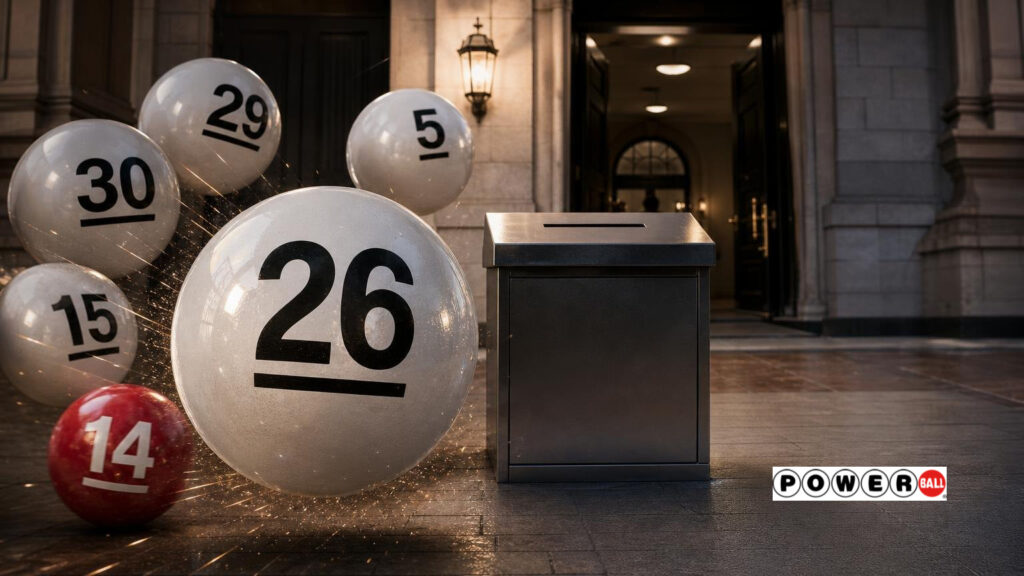
In American civic history, 26 carries a meaning far larger than its place in a sequence. It identifies the 26th Amendment, which protects the right of citizens age 18 and older to vote from being denied or abridged on account of age.
That same number appeared in a completely different setting on September 23, 2026. Powerball’s main numbers were 5, 15, 26, 29 and 30, with Powerball 14. The published jackpot label was $332 Million. The appearance of 26 creates a timely doorway into civic history—not a causal connection between that history and a random lottery drawing.
Why 26 has a place in America’s civic memory
The number attached to a constitutional amendment can become a compact way to remember what the amendment protects. In this case, 26 points to voting rights and age. The amendment protects citizens who are 18 or older from having their right to vote denied or abridged on account of age.
Two numbers therefore matter to the story, but they do different jobs. 26 identifies the amendment. 18 is the age threshold stated in its text. Keeping those roles separate makes the amendment easier to understand: one number is its place in the amendment sequence, while the other defines the group whose voting right receives the stated protection.
The 26th Amendment was ratified in 1971. That year, together with the amendment number and the age threshold, gives the subject a concise numerical framework: 26, 18 and 1971. Of those, 26 is the civic shorthand that happened to overlap with the fresh Powerball draw.
One number, two entirely different meanings
In the amendment’s name, 26 is fixed. It remains the identifying number of the 26th Amendment and carries a specific association with voting rights for citizens age 18 and older.
In the September 23 Powerball result, 26 served only as one of five randomly drawn main numbers. It appeared alongside 5, 15, 29 and 30, while 14 was the Powerball. Its civic significance did not influence the drawing, and the draw does not change or add to the amendment’s meaning.
That distinction is central to America Through Numbers. A familiar number can connect two subjects in a memorable way without establishing prediction, influence or hidden design. Here, the connection is exact and visible: 26 is both the amendment identifier and one of the main numbers in the draw. Everything beyond that belongs to separate contexts.
Reading what the amendment actually protects
The precise protection matters. The 26th Amendment concerns the right of citizens age 18 and older to vote and bars denial or abridgment of that right on account of age. The amendment number itself is not an age, and 26 should not be confused with the threshold in the text.
Readers who want to examine the official constitutional material can visit the Congress.gov Constitution Annotated — 26th Amendment. That source presents the amendment directly and keeps the civic meaning of 26 grounded in the official text rather than in coincidence or symbolism.
The draw can also be viewed in its proper lottery context through the Powerball results page and the broader results archive. Those records document the number as a draw result, not as a civic message.
Why the overlap is worth noticing
Numbers often work as handles for memory. In this case, seeing 26 can prompt a useful distinction: the 26th Amendment is the amendment’s label, while 18 is the protected voting-age threshold stated in its text. The lottery appearance offers an occasion to revisit that distinction, but no basis for assigning special lottery power to the number.
People may bring personal, historical or cultural associations to numbers they notice. Those associations can make a number easier to remember, yet they do not alter the random role of a ball in a drawing or improve the odds attached to any selection.
For an interactive look at how number choices can reflect recognizable human preferences, See the patterns behind the numbers people choose.
On September 23, 2026, 26 was simply one Powerball main number. In American civic history, however, it remains the number identifying an amendment ratified in 1971 that protects voting rights for citizens age 18 and older from denial or abridgment on account of age. The shared number is a coincidence; the history it helps people remember is real.
A couple of useful follow-ups
What does 26 represent in the 26th Amendment?
The number 26 identifies the amendment. It is not the voting-age threshold.
What age is stated in the 26th Amendment?
The amendment protects the right of citizens age 18 and older to vote from denial or abridgment on account of age.