news
Why 26 Means Voting Rights—and a Mega Millions Number
Mega Millions drew 26 on September 4, 2026—the same number that identifies a major voting-rights amendment ratified in 1971.
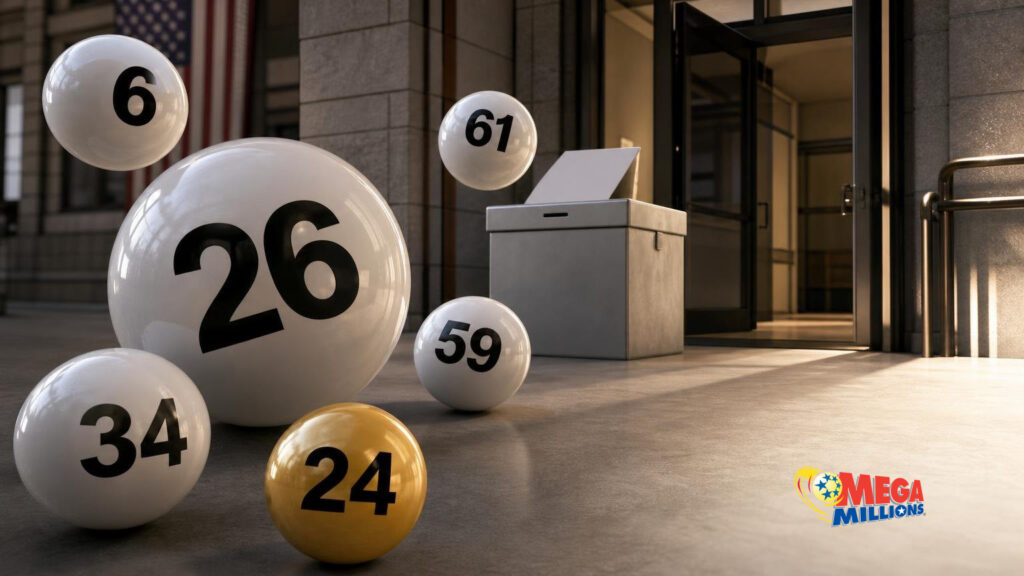
Some numbers carry meaning long before they appear in a lottery draw. In American civic history, 26 identifies an amendment protecting the voting rights of citizens age 18 and older. In the Mega Millions drawing held on September 4, 2026, that same number occupied a very different role: it was one of five randomly drawn main numbers.
The complete main-number line was 6, 26, 34, 59 and 61. The Mega Ball was 24, and the published jackpot label was $193 Million. The overlap gives this edition of America Through Numbers its doorway into a larger story—not because constitutional history influenced the drawing, but because a familiar civic number happened to emerge from it.
What the 26th Amendment protects
The 26th Amendment protects the right of citizens age 18 and older to vote from denial or abridgment on account of age. It was ratified in 1971.
That wording gives two numbers distinct jobs. The number 26 identifies the amendment itself. The number 18 is the age threshold stated in its text. Keeping those roles separate matters: 26 is not the voting age, and 18 is not the amendment’s number.
For readers who want to examine the constitutional text and its official treatment directly, the authoritative reference in this story is Congress.gov Constitution Annotated — 26th Amendment. It provides the official source behind the civic connection explored here.
Why 26 is culturally memorable
Numbers become memorable when they act as compact labels for ideas people recognize. Here, 26 is attached to a specific protection involving citizenship, age and the right to vote. Saying “the 26th Amendment” turns a two-digit number into shorthand for that constitutional provision.
Its memorability also depends on knowing what the number does—and what it does not do. It marks the amendment’s identity, while the text centers on citizens age 18 and older. That contrast between 26 and 18 is the key to reading the reference accurately.
This is why the appearance of 26 in a current lottery result can catch the eye. The draw supplies the timely number; American civic history supplies its separate cultural meaning. The connection is real and exact, even though it is purely coincidental.
One number, two unrelated roles
In the September 4 drawing, 26 was simply a main number, sitting between 6 and 34 in the displayed sequence of 6, 26, 34, 59 and 61. It did not carry a constitutional meaning inside the game, and the 26th Amendment did not cause, influence or predict its selection.
That distinction is central to understanding number stories. People naturally recognize familiar numbers and connect them with facts, dates or institutions they already know. Recognition happens after the result; it does not explain why a random number appeared.
The other values in the draw should likewise be read as the supplied result, not as a coded civic message. The main numbers were 6, 26, 34, 59 and 61; the special ball was Mega Ball 24; and the jackpot label was $193 Million. Readers can view the game’s Mega Millions results page or browse the broader results archive.
The value of noticing without predicting
A coincidence can be worth exploring without becoming a prediction. Seeing 26 may prompt someone to remember the 26th Amendment, its 1971 ratification and the protection stated for citizens age 18 and older. That is a meaningful act of recall, not a strategy for choosing future lottery numbers.
Lottery results and civic history operate in different worlds. One produced a random main number on a particular date. The other gives that number an established place in the language of American voting rights. Putting them side by side creates a useful reminder: numbers can be random in one setting and deeply memorable in another.
If you are curious about how personal associations shape number choices, See the patterns behind the numbers people choose. The exercise is about recognizing preferences and associations, not predicting results or changing the odds.
On September 4, 2026, 26 was both a randomly drawn Mega Millions main number and a familiar constitutional label. The drawing did not give the amendment its importance, and the amendment gave the drawing no special meaning. The interest lies in the clean coincidence—and in understanding exactly what each use of 26 represents.
A couple of useful follow-ups
What is the connection between 26 and the September 4, 2026 Mega Millions draw?
The number 26 was drawn as a main number, and 26 also identifies the 26th Amendment. The overlap is coincidental and does not imply that the amendment influenced or predicted the draw.
What does the 26th Amendment protect?
It protects the right of citizens age 18 and older to vote from denial or abridgment on account of age.