Lottery Combinations Calculator: How Many Number Combinations Are Possible?
Calculate lottery combinations and understand combinations, permutations, repeated digits, special balls, Powerball odds and Mega Millions odds.
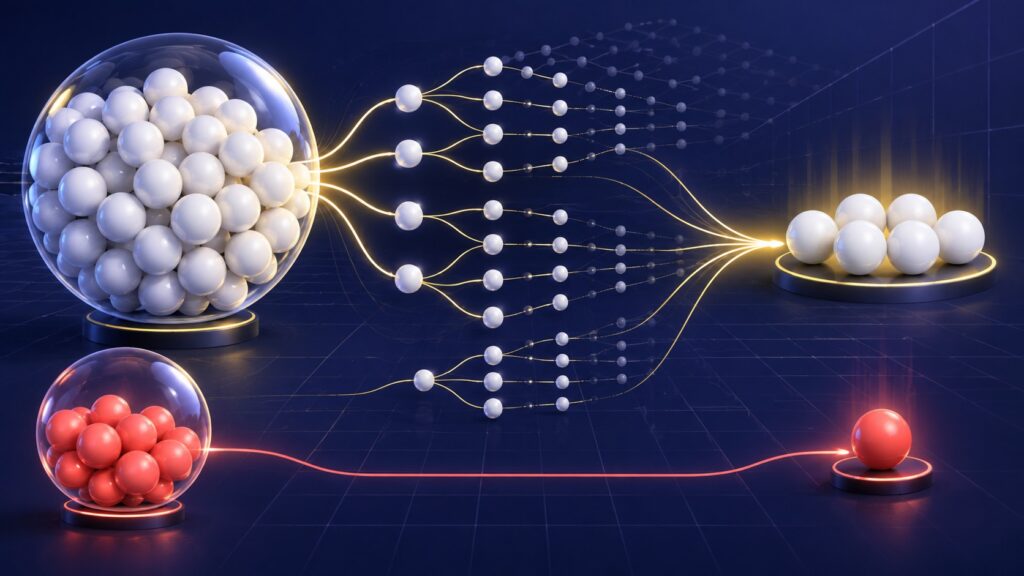
To count lottery combinations when order does not matter and numbers cannot repeat, use C(n,k) = n! / [k!(n-k)!]. If a game also draws one special ball from a separate pool, multiply the main-number combinations by the size of that special pool.
For Powerball, that is C(69,5) × 26 = 292,201,338 possible jackpot combinations. This explains the jackpot odds; it does not identify a more likely set of numbers.
Lottery combination calculator
Enter the size of the main pool, how many main numbers are selected, and the number of choices in a separate special-ball pool. Use 1 when the game has no special pool.
Combinations, permutations and repeated digits
Combination: order does not matter
A line containing 4, 12, 19, 27 and 31 is the same selected set if displayed in another order. Unique-ball jackpot games normally use combinations.
Permutation: order matters
In an exact-order digit game, 1-2-3 and 3-2-1 are different outcomes. Without repetition, the count is P(n,k) = n!/(n-k)!.
If repetition is allowed and each of d positions can contain any of r digits, the number of sequences is rd. A three-position decimal draw therefore has 10³ = 1,000 ordered results, from 000 through 999.
Worked examples for major games
| Game or format | Calculation | Possible top-prize outcomes | Why |
|---|---|---|---|
| Powerball | C(69,5) × 26 | 292,201,338 | Five unique white balls plus one red ball from a separate 26-number pool. |
| Mega Millions | C(70,5) × 24 | 290,472,336 | Five unique main numbers plus one Mega Ball from a separate 24-number pool. |
| Generic 6-from-49 game | C(49,6) | 13,983,816 | Six unique numbers; no separate special pool in this example. |
| Three ordered digits | 10³ | 1,000 | Three positions, each allowing digits 0 through 9 with repetition. |
Powerball’s official rules use five numbers from 1–69 and one Powerball from 1–26. Mega Millions uses five from 1–70 and one Mega Ball from 1–24. The calculations above reproduce the official jackpot odds for those matrices.
What buying more unique combinations changes
If a jackpot has N equally likely combinations and you hold m different valid lines for the same drawing, your jackpot probability is m/N. Ten different Powerball lines cover 10 of 292,201,338 outcomes, or about 1 in 29.2 million for that drawing.
That is ten times the coverage of one line, but it also costs ten times as much and leaves the probability extremely small. Buying duplicate lines does not cover an additional outcome; it may only multiply the payout attached to that same combination if it wins, subject to game and jurisdiction rules.
Why a sorted grid can be misleading
Results pages commonly sort main numbers from low to high for readability. In an unordered game, sorting does not create a new combination. In an exact-order game, however, the original sequence is part of the result and must be preserved. Always identify whether the operator awards prizes by set, by position, or through both “straight” and “box” options.
Frequently asked questions
How many different Powerball combinations are there?
There are 292,201,338 jackpot combinations under the current 5-from-69 plus 1-from-26 matrix.
How many Mega Millions combinations are there?
There are 290,472,336 jackpot combinations under the current 5-from-70 plus 1-from-24 matrix.
Does the order of main lottery numbers matter?
Not in games that match an unordered set of main balls. Order does matter in positional digit games and other exact-order prize types.
Can two tickets have the same combination?
Yes. Separate tickets can contain the same line. They do not cover two different outcomes, and multiple jackpot-winning tickets can cause a jackpot to be divided according to the game rules.
Official sources
Game rules can change. Confirm the current matrix and purchase rules with the official lottery in your jurisdiction.